
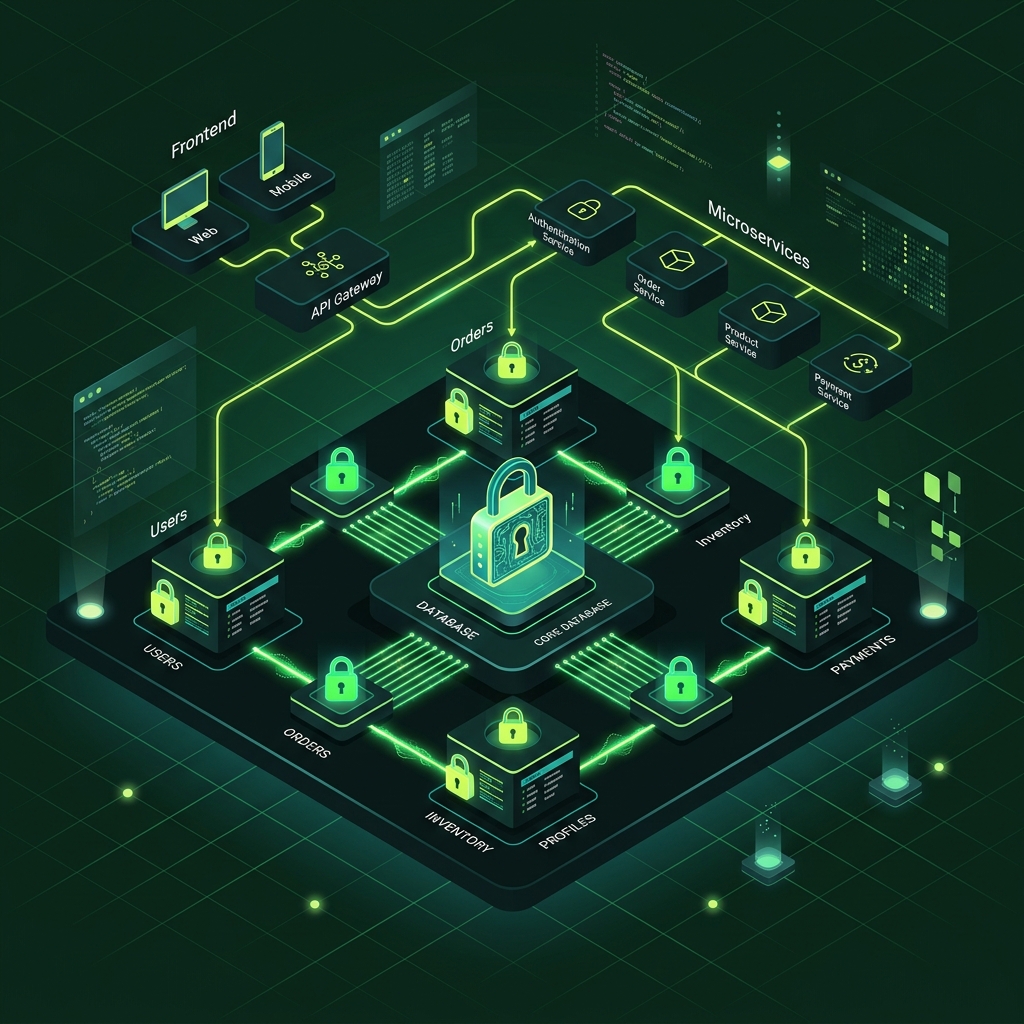
The emergence of natural language software development—commonly referred to as "vibe coding"—has transformed the software engineering landscape. Platforms such as Lovable, Replit, v0.dev, and Bolt.new allow individuals without formal technical training to design, build, and deploy web applications by simply describing their requirements in plain English. By utilizing advanced artificial intelligence models to convert conversational prompts into working source code, database structures, and cloud deployments, these platforms have significantly lowered the barriers to software creation.
However, this rapid mode of construction often introduces severe security challenges. AI coding assistants prioritize rapid feature delivery and functional visual feedback over defensive programming and secure architectural design. Consequently, vibe-coded applications are frequently deployed to production with structural vulnerabilities.
A notable illustration of this systemic risk is CVE-2025-48757, a critical security vulnerability identified in early 2025 that affected over 170 live Lovable applications. This vulnerability exposed user databases, leaking sensitive personal data, administrative credentials, API tokens, and financial records to the public internet. Because AI-generated applications share predictable design patterns, automated scanning tools can quickly discover and exploit these flaws shortly after deployment.
Vulnerability Typologies in Lovable and Supabase Environments
Lovable applications typically utilize a modern frontend framework paired with a Supabase backend, which consists of a PostgreSQL database exposed through an automatic RESTful API layer. In this architecture, the frontend client makes direct database calls using a public, unprivileged anonymous key. Security in this model relies entirely on Row Level Security (RLS) to restrict data access. If database tables are created without explicit access control policies, any remote user can modify web requests to read, edit, or delete all stored data.
| Vulnerability Category | Prevalence | Severity | Core Technical Hazard |
|---|---|---|---|
| Missing RLS | 89% | Critical | Public keys executing unrestricted queries without user checks. |
| Service Role Key Exposure | 34% | Critical | Frontend exposing administrative keys that bypass database rules. |
| Direct User Table Queries | 41% | High | Exposing private authentication profiles and emails directly client-side. |
| Secrets in Client Vars | 27% | High | VITE_ prefix bundling third-party API tokens into browser bundles. |
| Absent Input Validation | 73% | Medium | Script injection and database corruption via unvalidated form inputs. |
Missing Row Level Security
When Lovable executes database commands to construct tables, it often fails to enable Row Level Security or establish access policies. Without these configurations, Supabase's data access layer permits any user to modify, read, or delete records across tables. Because the public anonymous database key is exposed in the frontend source code by design, anyone who discovers the application's URL can bypass the frontend user interface entirely and interact directly with the database.
Service Role Key Exposure in Frontend Code
AI assistants occasionally initialize the Supabase client using the administrative "service_role" token to bypass permissions issues encountered during development. Since the service role token is designed to bypass all RLS policies for backend administrative tasks, hardcoding it within client-side files allows any user to inspect the source code using standard browser developer tools, extract the key, and gain full, unrestricted access to the database.
Vulnerability Typologies in Replit Environments
Replit provides an active cloud development environment and hosting platform. While Replit deploys applications with standard HTTPS encryption and dependency monitoring, the platform's execution model introduces specific security risks when managed by non-technical creators:
| Vulnerability Category | Severity | Technical Threat | Corrective Action |
|---|---|---|---|
| Credentials in Public Repls | Critical | Exposure of raw credentials in source files. | Use Replit Secrets and make Repl private. |
| Uncontrolled AI Agent DB Ops | Critical | Accidental structural deletion or database wipes. | Use backups and review schema changes. |
| Unprotected Env Files | High | Accidental staging of files to public sandbox. | Delete .env files and configure Replit Secrets. |
| Fork-Inherited Secrets | High | Subsequent clones inheriting database access. | Rotate all tokens upon duplicating workspace. |
The Vibe Coding Security Mega-Prompts
Copy the appropriate audit mega-prompt below and paste it directly into your AI chat window to audit, find, and automatically repair all vulnerabilities in one run.
Please perform a complete security audit and lock down our Lovable application and Supabase backend. Please execute the following security hardening steps:

1. ENABLE ROW LEVEL SECURITY (RLS):
   - Turn ON Row Level Security (RLS) for every single database table we have created.
   - For each table, write a strict security policy checking the logged-in user's ID (e.g. auth.uid() = id or user_id).
   - Ensure a logged-in user can ONLY read (SELECT), insert (INSERT), update (UPDATE), or delete (DELETE) their own records.
   - Block all public read/write access unless the table is explicitly meant to be public (like a public catalog).

2. AUDIT SECRET CREDENTIALS & API KEYS:
   - Scan the entire codebase to ensure no API keys or passwords are written directly into our code.
   - Replace any client-side usage of the administrative "service_role" key with the safe, public "anon" key.
   - Strip the public "VITE_" prefix from any environment variables containing private secrets (e.g., Stripe secret keys, OpenAI keys) so they remain server-only.
   - Move any code that makes third-party API calls using private keys to secure backend functions (like Supabase Edge Functions or a server-side route).

3. SECURE USER DIRECTORIES:
   - Check if we query the private "auth.users" table from the frontend.
   - If yes, create a safe public "profiles" table with non-sensitive fields (id, display_name, avatar_url) and enable RLS on it.
   - Write a database trigger to copy basic user details into this "profiles" table upon registration.
   - Update all frontend screens and queries to fetch data from the safe "profiles" table instead of "auth.users".

4. ADD INPUT VALIDATION:
   - Integrate strict input verification (e.g., using a library like Zod) for all text areas, inputs, and file upload forms.
   - Enforce character limits, valid email formats, and sanitize text to prevent cross-site scripting (XSS) or code injection.
   - Restrict file upload types (e.g., JPEG/PNG only for images) and set maximum file sizes (e.g., 5MB).

Please provide the exact SQL code executed for the database changes, list any files edited, and explain in simple, plain English how you secured our app.
Interactive Verification Checklist
Evaluate your app's security posture in real-time. Check off each step below to dynamically calculate your overall security compliance score.
Establishing a continuous verification loop ensures that security fixes are not accidentally reverted during subsequent feature updates. By combining clear analogies, simple-language prompts, and native automated auditing tools, non-technical developers can build, deploy, and maintain secure applications with confidence.