

💡 Quick Summary
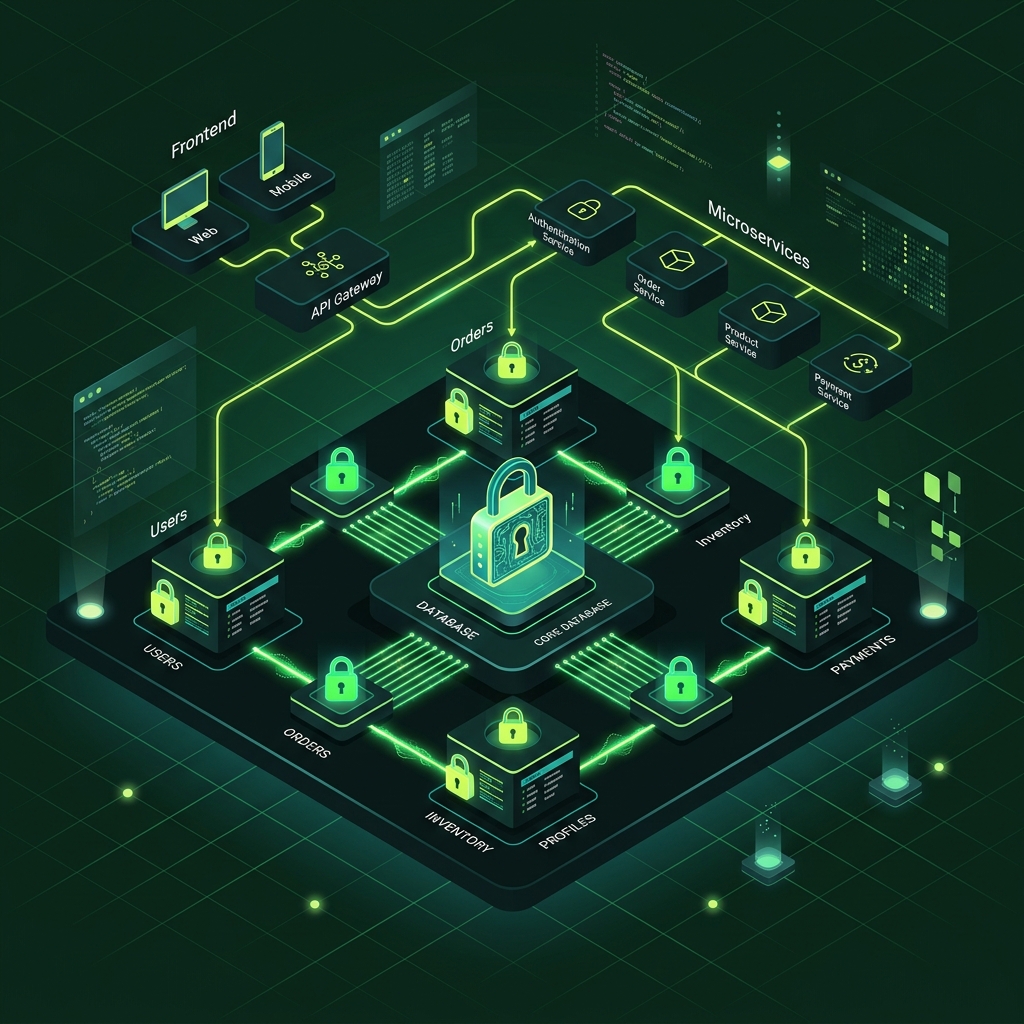
Integrating artificial intelligence into a subscription model requires a robust software architecture. SaaS development AI focuses on combining traditional relational databases with LLM endpoints, semantic caching layers, and vector search. This guide shows how to choose the right models, design secure data pipelines, and cut token costs in production.
AI is the new standard interface for software. However, wrapping an LLM API in a basic React UI is no longer enough to build a defensible product. Startups must build complex logic such as context-aware agentic routing, retrieval-augmented generation (RAG), and strict data residency gates to create real enterprise value. Let's explore how to design these systems.
Choosing Your SaaS AI Model Stack
Building an AI SaaS requires balancing intelligence, latency, and operational cost. In 2026, developers utilize a multi-model approach, routing requests to different models depending on the complexity of the task.
| AI Model | Primary Strength | Cost / 1M Tokens | SaaS Use Case |
|---|---|---|---|
| 1. Claude 3.5 Sonnet | Logical reasoning, structured code generation, UI wireframing. | Input: $3.00 | Output: $15.00 | Complex programming agents, mathematical analysis, document auditing. |
| 2. GPT-4o | General conversation, high availability, fast JSON mode. | Input: $2.50 | Output: $10.00 | Customer service agents, chat interfaces, dynamic data classification. |
| 3. DeepSeek-V3 | Extremely low-cost reasoning, math capabilities. | Input: $0.14 | Output: $0.28 | High-volume data processing, sorting, batch text classification. |
| 4. Llama 3 (Self-hosted) | Complete privacy control, customizable fine-tuning. | Varies (Compute/GPU based) | On-premise deployments, highly regulated medical/legal SaaS platforms. |
Optimizing AI Token Cost with Semantic Caching
API token costs can grow exponentially when launching an AI SaaS. If multiple users ask similar questions, routing every query directly to the LLM is financially inefficient. Implementing semantic caching allows you to serve prior completions for semantically similar prompts.
Here is a Python example illustrating how to implement semantic cache lookup using a Vector DB (like Supabase or pgvector) and Redis to intercept duplicate queries:
import redis
import openai
from pgvector.django import CosineDistance

r = redis.Redis(host='localhost', port=6379, db=0)

SIMILARITY_THRESHOLD = 0.92

def get_semantic_cached_response(user_prompt):
    # 1. Generate embedding for user prompt
    prompt_embedding = openai.Embedding.create(
        input=user_prompt,
        model="text-embedding-3-small"
    )['data'][0]['embedding']

    # 2. Query PgVector for the closest semantic match
    # SELECT response FROM prompt_cache WHERE distance < (1 - threshold) LIMIT 1
    match = PromptCache.objects.annotate(
        distance=CosineDistance('embedding', prompt_embedding)
    ).filter(distance__lt=(1 - SIMILARITY_THRESHOLD)).order_by('distance').first()

    if match:
        print("⚡ Cache Hit: Retrieved semantic match from database")
        return match.response

    # 3. Cache Miss: Route to Claude/GPT-4 API
    print("🤖 Cache Miss: Routing query to LLM API")
    completion = openai.ChatCompletion.create(
        model="gpt-4o",
        messages=[{"role": "user", "content": user_prompt}]
    )

    response_text = completion.choices[0].message.content

    # 4. Save new result to the cache database for future matching
    PromptCache.objects.create(
        prompt=user_prompt,
        embedding=prompt_embedding,
        response=response_text
    )

    return response_text
The AI SaaS MVP Launch Stages
Launching an AI-native SaaS product requires a disciplined execution pipeline. Over-engineering early vector pipelines before finding users is a common error. Follow our structured launch roadmap to build efficiently:
Scoping & Core UX Design (Week 1)
Define the core value proposition. Map out user onboarding, prompt inputs, and the format of the output payload. Avoid complex multi-agent flows initially.
Model Selection & Prompt Tuning (Weeks 2-3)
Choose your model stack. Test and refine system instructions using tools like LangSmith. Ensure prompts are structured to output clean JSON schemas.
Middleware & DB Integration (Weeks 4-5)
Build the application backend. Integrate authentication (Clerk), payment gates (Stripe), databases (Supabase), pgvector search engines, and prompt caching.
Security Audit & Production Launch (Weeks 6-8)
Conduct a complete security audit. Harden database Row Level Security (RLS), set strict rate-limits to prevent API abuse, and deploy to Vercel/AWS.
Structuring Data Privacy Pipelines
Enterprise clients are highly sensitive to how their internal data is handled. If you pass user prompts directly to public LLM models, you risk leaking confidential information. To target corporate accounts, your SaaS architecture must ensure that:
- Zero training: Confirm that the selected LLM provider does not utilize your API request data to train future models.
- PII Redaction: Build a sanitization layer in your middleware to strip Personally Identifiable Information (PII) before routing prompts to external endpoints.
- Dedicated Hosting: For regulated sectors, host open-source models inside virtual private clouds (VPC) to keep all text data contained in your secure environment.
Conclusion: Lean AI Architecture Wins
Building an AI SaaS is more accessible than ever, but success demands engineering discipline. By starting with a lean MVP, selecting the right model tiers, and protecting your backend with caching middleware, you keep your operating margins high, paving a sustainable path toward scale.