
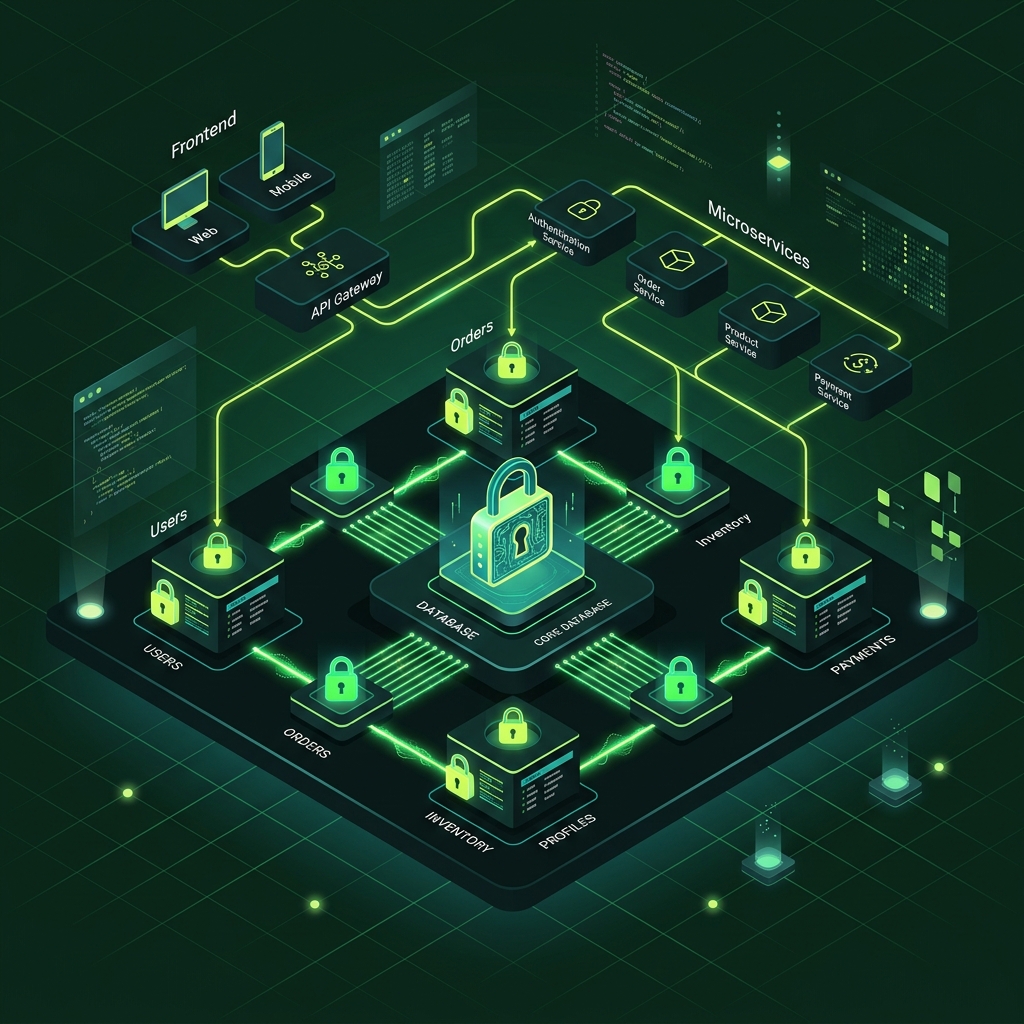

📌 Executive Definition
MVP development (Minimum Viable Product) is an agile software engineering methodology. It focuses on building the most stripped-down, fully functional version of an application to validate a core business hypothesis. By launching within 28 to 45 days, founders capture quantitative user feedback, minimize capital burn, and test product-market fit.
What Does MVP Stand For? (Programming, Slang, & Typos)
Depending on your context, "MVP" holds entirely different meanings. In software engineering, business development, and sports, it stands as a core benchmark.
💻 In Programming, Coding, & Software Terms ▼
In software terms, MVP stands for Minimum Viable Product. It represents the smallest deployable asset that has relational integrity, authentication, and solves the user's primary problem. It is designed to act as the production-ready code foundation for all future updates.
🏆 In Sports, Gen Z Slang, & Urban Dictionary ▼
In sports and popular slang, MVP stands for Most Valuable Player. It refers to the top-performing player on a team. In Gen Z and urban dictionary terms, calling someone "the MVP" or an "MVP person" is high praise, meaning they stepped up, saved the day, or performed exceptionally under pressure.
🚗 Typo Alert: What is \"MPV\" Development? ▼
If you searched for "MPV in development" or "what is MPV in business," it is almost certainly a typographical error for MVP. However, in automotive terms, MPV stands for Multi-Purpose Vehicle (a minivan). In software engineering, mpv (mpv.io) is a famous, highly customizable open-source command-line media player project widely integrated into media processing applications.
Is an MVP Just a Demo? (MVP vs. MMP vs. MMF)
No, an MVP is not a demo. A clickable demo or prototype is a "ghost foundation" it has no database connections, no actual security, and does not process live transactions. Understanding the structural differences between these terms is essential for proper technical planning:
| Concept | Definition | Key Goal | Data Backend |
|---|---|---|---|
| Clickable Demo | Figma or HTML wireframe showing the proposed UI. | Visual Pitching | ❌ None (Hardcoded data) |
| MVP (Minimum Viable Product) | A functional, secure app solving one core user problem. | User Validation | ✔ Production DB with Auth & RLS |
| MMP (Minimum Marketable Product) | The first polished version ready to sell commercially. | Revenue Growth | ✔ High-performance auto-scaling |
| MMF (Minimum Marketable Feature) | The smallest stand-alone feature that delivers user value. | Feature Expansion | ✔ Integrates with existing database |
Agile MVP Development: The 4 Pillars
Is MVP Agile or Waterfall? MVP development is the core execution model of Agile. Unlike the rigid, sequential phases of Waterfall (where you spend months planning before writing code), Agile MVP development focuses on rapid releases and quick adjustments. It directly aligns with the 4 Pillars of the Agile Manifesto:
1. Individuals and Interactions
Focus on developers, designers, and customers collaborating directly, rather than rigid, bureaucratic management structures.
2. Working Software
Prioritize launching functional software immediately over drafting extensive, theoretical documentation.
3. Customer Collaboration
Iterate on the app directly based on live user data rather than static contract negotiations.
4. Responding to Change
Adapt the product roadmap immediately as users interact with the live MVP, rather than following a fixed, stale plan.
Specialized MVP Frameworks: SaaS, AI, and Automation
Depending on your business model, MVP development will require different technical baselines:
🚀 SaaS MVP Development
Focused on B2B subscription software. Requires multi-tenant databases, Stripe subscription billing, secure user authentication (Clerk/Supabase Auth), and user tracking metrics (PostHog).
🤖 AI MVP Development
Focuses on integrating large language models (LLMs) or autonomous agentic loops. Requires prompt optimization, vector database selection (Pinecone/pgvector), and token caching middleware to control API costs.
⚙️ Automation MVP Development
Focuses on connecting existing systems to automate manual tasks. Relies heavily on API connectors, custom webhooks, and tool integrations (like GoHighLevel or Make.com) to validate the workflow before writing custom code.
How Do You Develop an MVP? (The 28-Day Plan)
A production-ready MVP should take exactly 4 to 8 weeks to build. To learn about the financial details, read our complete guide on how much MVP development costs. Here is the stage-by-stage plan we use at ValidMVPs:
MVP Development Stage Tracker
Stage 1: Technical Scoping Days 1 - 5
Determine the single core feature that validates your business model. Design the initial database tables and wireframe user journeys.
Stage 2: Core Engineering Build Days 6 - 20
Build the primary features, hook up user registration (Clerk/Supabase Auth), and develop API integrations (such as Stripe payments).
Stage 3: Security & Caching Hardening Days 21 - 24
Configure database Row Level Security (RLS), encrypt keys, and test the app for common vulnerabilities to ensure it passes due diligence.
Stage 4: Telemetry & Integrations Days 25 - 27
Connect product telemetry (PostHog), hook up error tracking (Sentry), and deploy to production servers (Vercel/AWS).
Stage 5: Launch & IndexNow Real-time Indexing Day 28+
Go live on your domain. Register sitemaps, notify search engines via IndexNow, and monitor early cohort feedback.
MVP Development for Startups, Fintech, & Enterprises
Different business ecosystems encounter different engineering hurdles during build sprints:
- Startups: Focus on velocity and capital conservation. The goal is zero-to-one validation before seed funding.
- Fintech: Must clear local compliance early. For KSA startups, this means integrating SAMA sandbox parameters and ZATCA Phase 2 billing structures immediately.
- Enterprises: Focus on data residency, VPC isolation, and compliance. Enterprise pilots must satisfy strict GDPR or local PDPL data storage rules.
Selecting MVP Development Services & Partners
Partnering with an MVP development agency, bespoke development company, or specialized software co-founder can accelerate your execution. When selecting a partner:
MVP Partner Audit Checklist
Complete Code Ownership
Never accept vendor lock-in. Ensure all code is exported to your private GitHub repository from Day 1.
Security Audits & Hardening
A partner must run dependency audits and set up database Row Level Security (RLS) so your app is investor-ready.
Agile 28-Day Execution Cycles
Choose partners with fixed timelines. Long timelines kill momentum and burn capital.
Build Your MVP in 28 Days with ValidMVPs
ValidMVPs turns startup concepts into secure, launch-ready software in 4 weeks. We combine AI-assisted development velocity with professional engineering validation, ensuring your app runs on local GCC servers, complies with SAMA/PDPL standards, and features clean, scalable code that passes VC due diligence. If you are ready to validate your SaaS or AI startup hypothesis, book an MVP discovery call today.