
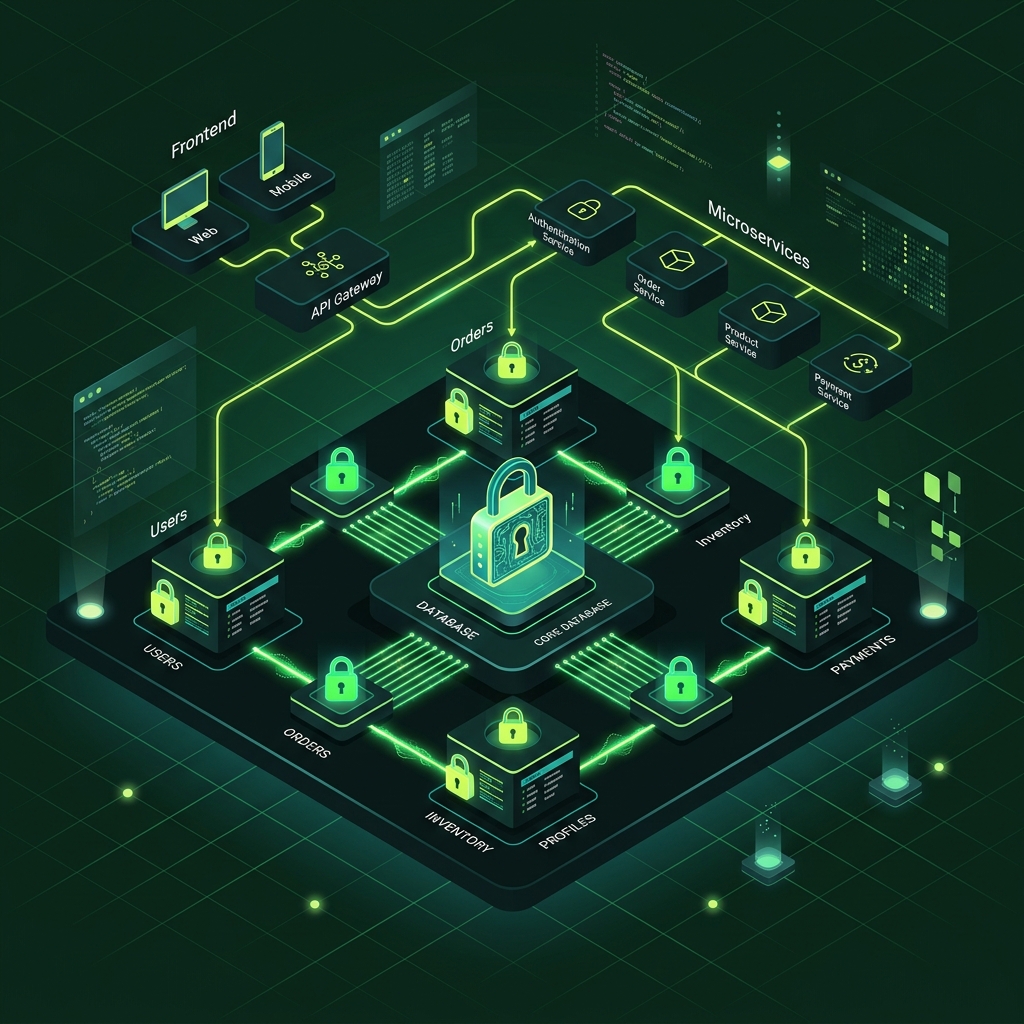

The year 2026 has fundamentally changed the physics of software development. With the rise of AI-native platforms like Lovable, v0, and Claude Code, non-technical founders can now build functional software prototypes in an afternoon. This has created a massive question for early-stage startups: Should you spend weeks learning to 'vibe code' your MVP yourself, or should you hire a professional development company to do it for you?
While building it yourself costs less cash up front, it can cost you months of opportunity delay, massive technical debt, and fatal security oversights. Conversely, hiring the wrong agency can drain your budget before you ever validate your product. In this guide, we break down the economics, risks, and speeds of both paths to help you make an informed decision.
Core Takeaway: The Hybrid Approach
If you have zero capital, build a rough mockup yourself using AI tools to validate demand. The moment you need real users, transaction data, or investor interest, hire a professional team to build a hardened, production-grade version. Don't launch unsecured code onto the open web.
The Rise (and Limits) of 'Vibe Coding'
Vibe coding enables founders to build front-end application mockups using AI prompts, but it cannot generate secure, scalable back-end infrastructure.
The idea of building a Minimum Viable Product yourself used to require spending six months learning JavaScript, database logic, and server configuration. Today, natural language has become the programming language. You can type instructions and watch a dashboard materialize in front of you.
However, there is a massive gap between a **prototype** that runs on your local browser and a **production-ready product** that handles real user payments, holds sensitive customer details, and scales to thousands of active sessions. As we explored in our guide on hardening AI-generated code, AI models are notoriously poor at applying security guardrails, optimizing complex database queries, and structuring clean API states.
Option A: Building Your MVP Yourself (DIY)
Building your MVP yourself minimizes upfront cash cost but places the burden of security, database scaling, and code maintainability entirely on your shoulders.
For founders with absolute budget constraints, the DIY path is the only option. It allows you to rapidly translate thoughts to screens.
✓ The Advantages (Pros)
- Absolute Control: You make every micro-decision and build exactly what is in your head.
- Immediate Iteration: No waiting for developer check-ins. If you want to change a button color or text copy, you do it instantly.
- Zero Cash Outlay: Your only costs are subscriptions to AI tools ($20–$50/month) and hosting ($10–$20/month).
− The Disadvantages (Cons)
- Security Vulnerabilities: AI code generators often leave database Row Level Security (RLS) disabled, expose secret API keys on the frontend, and fail to prevent simple SQL injections. For a complete safety checklist, see our guide on preparing your MVP codebase for VC due diligence.
- Spaghetti Architecture: As the product grows, the AI model loses track of global state, leading to endless loops of bugs where fixing one feature breaks three others.
- Severe Opportunity Cost: Every hour you spend trying to debug a server configuration is an hour you are not talking to customers, marketing, or closing sales.
Option B: Hiring an MVP Development Company
Hiring an MVP development company guarantees a fully secure, professionally architected, and compliance-ready codebase launched in 2 to 3 weeks.
Hiring a dedicated MVP developer means delegating the entire technical execution to a team that specializes in speed, scalability, and security.
✓ The Advantages (Pros)
- Production Security Defaults: Experienced developers build in multi-tenant boundaries, secure Supabase RLS, and isolate credential environments on day one.
- Venture-Scale Architecture: Codebases built in clean TypeScript/React can be easily handed over to an in-house CTO later, without requiring a complete rewrite.
- Guaranteed Launch Timelines: A focused team (such as our 2-3 week sprints) guarantees you ship on time, preventing project drag.
− The Disadvantages (Cons)
- Upfront Cash Required: You must commit capital to build the first version (see our guide on understanding MVP costs).
- Vendor Dependency Risk: If you pick a poor agency, they may withhold code access or use niche, custom tools that create lock-in.
Comparison Matrix: DIY vs. MVP Development Agency
| Evaluation Criteria | Building Yourself (DIY) | Hiring a Specialized Agency |
|---|---|---|
| Time to Launch | 6 - 12 Weeks (due to debugging loops) | 2 - 3 Weeks (standard sprints) |
| Initial Cash Cost | Low ($50 - $150/month) | Medium to High (fixed project fee) |
| Codebase Defensibility | Low (unstructured generative code) | High (TypeScript clean architecture) |
| Security & RLS | Poor (usually exposed keys/disabled RLS) | High (configured security by default) |
| Investor Due Diligence | Fails (spaghetti structure, raw AI code) | Passes (clean Git history & clean handoff) |
| Founder Focus | Tracted by coding and debugging tasks | 100% on Sales, Marketing & Traction |
The Danger of 'Vibe Coding' Without Technical Supervision
Deploying AI-generated code without professional technical supervision risks exposing database tables and violating user data privacy laws.
Many non-technical founders believe that if a page looks clean, it is ready for launch. They invite early users to register, input credentials, and store personal notes. This is a critical security risk.
AI coding tools generate frontends brilliantly, but they cannot verify if data operations are secure behind the scenes. Row Level Security (RLS) is often disabled to make the app work quickly during prototyping. The moment an automated script crawls your domain, your user database can be stolen or wiped out entirely.
How to Make the Right Choice for Your Startup
Ask yourself these four questions:
- Do I have a validated target market? If you haven't spoken to a single potential customer, don't build anything yet. Speak to users first.
- Is my budget less than $2,000? If yes, you must build the initial mockups yourself using basic AI templates. Spend your time, not your money.
- Does the app handle transaction data, personal health information, or financial compliance? If yes, you should not DIY. Regulatory bodies and security laws (such as GDPR or regional equivalents) require certified architectures.
- Am I pitching to venture capitalists in the next 60 days? If yes, you need a technical partner who can build investor-ready demo pipelines and show a robust, clean codebase during due diligence.
Why ValidMVPs is Your Acceleration Partner
At ValidMVPs, we specialize in bridging the gap between velocity and safety. We write clean, production-ready codebases using React, Next.js, and PostgreSQL. We ensure your databases have RLS enabled, enforce strict user scopes, and provide a full codebase handover from day one. If you have prototyped an idea and need to harden it for seed investors, book a consultation with ValidMVPs today and ship a secure MVP in 2-3 weeks.